
Engineering needs EDI
Submitted by:
Sara Waddington
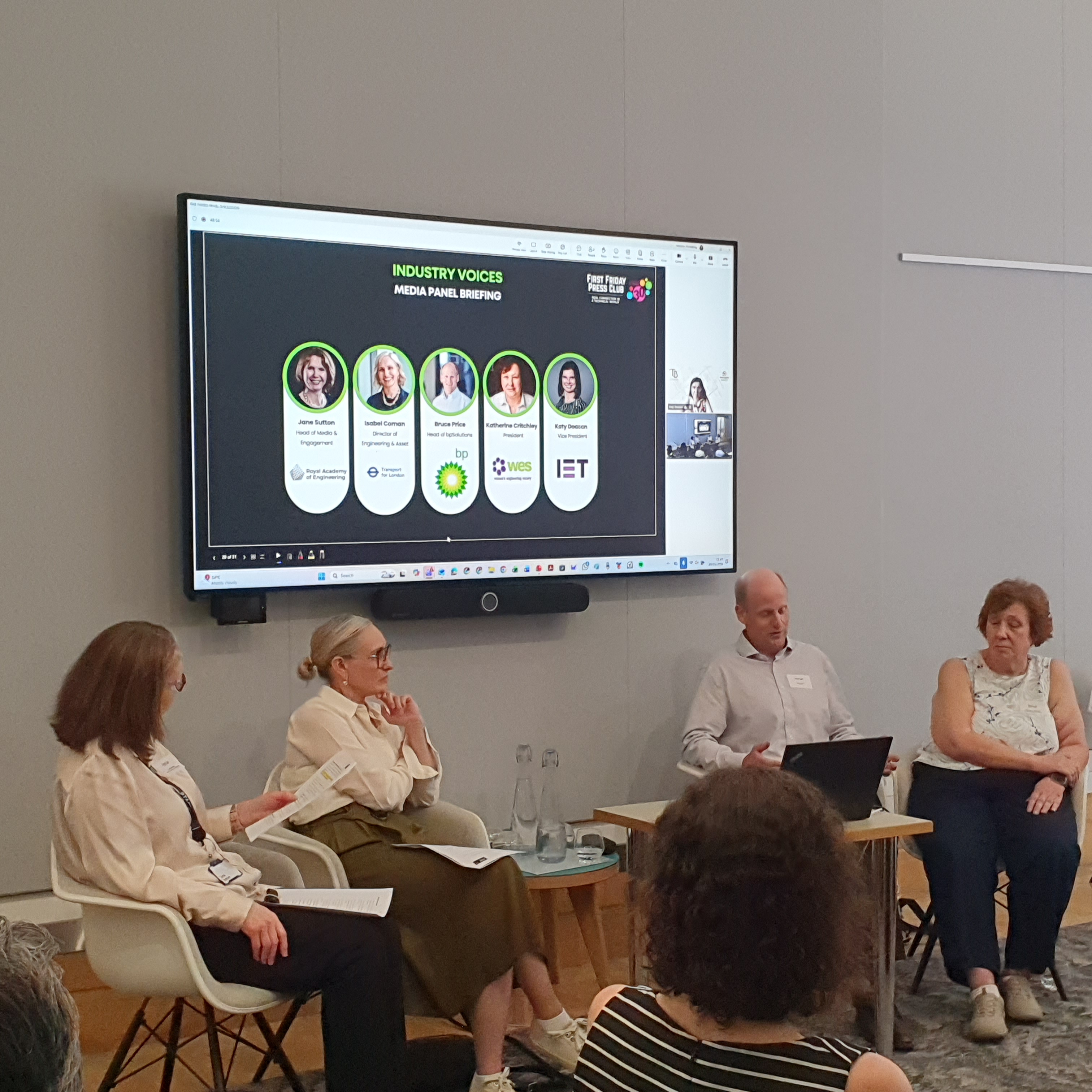
In the run up to International Women in Engineering Day 2026 (INWED) on 23 June 2026, ISMR attended an ‘Industry Voices’ panel event, hosted by the First Friday Press Club, at the Royal Academy of Engineering in London, UK, on 29 May 2026.
The theme for INWED 2026 was “Engineering Intelligence.” The discussion included the latest thinking on equity, diversity and inclusion (EDI) from engineering leaders.
The importance of diversity
Chairing the panel was the Royal Academy of Engineering’s head of media and engagement, Jane Sutton. She observed: “The academy was founded in 1976 with a cohort of 130 white men as Fellows. We’ve become much more diverse since then with a fellowship that now includes 13% women.”
Panellist Isabel Coman is an Academy Fellow as well as director of engineering and asset strategy at Transport for London (TfL). She explained how TfL needs a diverse workforce to overcome the challenges of legacy infrastructure, heavy use, constrained funding and the urgent need to adapt to climate change and customer expectations.
“Diversity is really important in our environment, where understanding and relating to customers helps us to make big decisions. INWED’s theme of ‘Engineering Intelligence’ means that the application of creativity, while encouraging people in different technical disciplines to work together, helps leaders to make good decisions,” she said.
Bruce Price, Head of bp Solutions, leads a team of 2000 operational experts, who operate and maintain assets and deliver capital projects. He said: “I learned early in my career that when people feel the ability to speak, challenge and disrupt the status quo, we get better engineering decisions. Working with a diverse team of people delivers better results. When different voices are heard, people learn faster from each other and solve more complex problems. That makes inclusion an integral part of engineering excellence, not an add-on.”
Katherine Critchley, President of the Women’s Engineering Society (WES), the organisation behind INWED, began her career as an engineering apprentice in the early 1980s and has experience across the automotive and defence industries.
She said: “Since I started out, women have increased from a few percentage points to 16% of the engineering workforce today. The first INWED in 2014 celebrated women in engineering and encouraged more women to join the profession. Today INWED is global, with billions of online impressions. We have set ‘Engineering Intelligence’ as the theme for INWED 2026 to highlight that the key to success is not artificial intelligence (AI) but human intelligence, communication and good design.”
Katy Deacon, Vice President, Institute of Engineering & Technology (IET), brought the perspective that inclusion applies to much more than gender. As a VP and Chair of the Equity, Diversity and Inclusion board at the IET and a Royal Academy of Engineering visiting professor in inclusive engineering design, Deacon is a wheelchair user and champions inclusion for disabled people.
“Even though 24% of people in the UK have a disability, only 14% of the engineering workforce has disabilities. That’s a wake-up call. Disabled professionals face disability tax, where they need to spend more time, energy and money to advocate and get adjustments. If you can’t get out of your home, it’s hard to join the workforce and contribute to the diversity that the other panellists are championing,” she said.
Where are we now?
Where are we now with diversity and how far have we come in the fifty years since the Academy was founded?
To read the rest of this article in the July/August 2026 issue of ISMR, see https://joom.ag/BqUd/p36