
Steel fabrication in GCC markets
Submitted by:
Sara Waddington
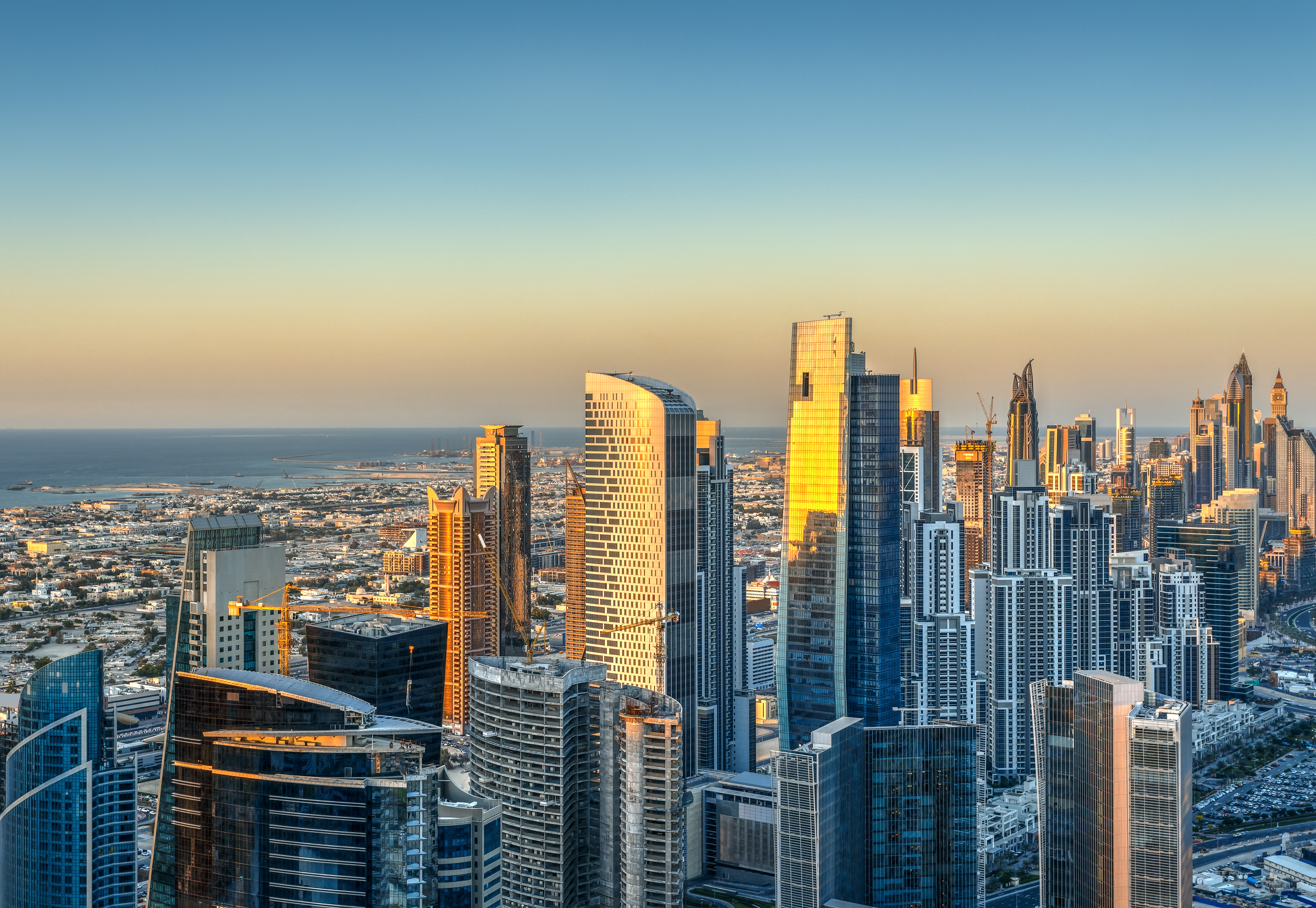
(Image: Aerial view of Dubai - @Shutterstock)
We highlight selected growth prospects, opportunities and selected analysis of GCC markets for steel fabrication manufacturers in the December 2025/January 2026 issue of ISMR.
Over the last few years, countries in the Gulf have succeeded in gradually diversifying their economies and relying more on the non-oil sector. Growth, over the last few years, was mainly driven by those non-oil activities said the International Monetary Fund (IMF) on 20 October 2025.
“The current landscape globally also provides, especially with investments in artificial intelligence (AI) and other fast-growing sector opportunities, for countries in the region to accelerate their diversification and use some of those large investments to accelerate this economic transformation. Opportunities to build new trade routes and new connectivities, whether with neighbouring countries or with new regional partners, are there. We have seen, over the past few years, more of those with other regions such as Africa, Central Asia and, more recently, with Europe [in terms of] trade agreements,” said Jihad Azour, Director of Middle East and Central Asia Department, International Monetary Fund, on 20 October 2025.
He confirmed that recent trade measures, introduced in terms of tariffs, have had limited direct impact on countries in the region to date. This is due to various factors, including the limited tariff levels and the relatively limited trade volume between the region and the U.S. However, he did not rule out the indirect trade impact “that could materialise over time with changes in trade routes.”
Rising regional growth
According to World Bank analysis in June 2025, economic growth across the Gulf Cooperation Council (GCC) was projected to increase in the medium term to 3.2% in 2025 and 4.50% in 2026. This growth is likely to be driven by the expected rollback of OPEC+ oil production cuts and robust expansion of non-oil sectors.
According to its edition of the Gulf Economic Update (GEU), regional growth was 1.7% in 2024—an improvement from 0.3% in 2023. The non-hydrocarbon sector remained resilient, expanding by 3.7% — largely fuelled by private consumption, investment and structural reforms across the GCC.
“At the same time, global trade uncertainty presents challenges, as a global economic slowdown remains a key downside risk for the region. To mitigate these risks, GCC countries need to accelerate economic diversification reforms and strengthen regional trade,” it advised in June 2025.
“The resilience of GCC countries in navigating global uncertainties while advancing economic diversification underscores their strong commitment to long-term prosperity,” said Safaa El Tayeb El-Kogali, division director for the GCC countries at the World Bank. “Strategic fiscal policies, targeted investments and a strong focus on innovation, entrepreneurship and job creation for youth are essential to sustaining growth and stability.”
The report entitled “Smart Spending, Stronger Outcomes: Fiscal Policy for a Thriving GCC”, discusses the effectiveness of fiscal policy in ensuring macroeconomic stabilisation and encouraging growth. The topic is particularly relevant as oil price fluctuations strain budget balances in several countries across the region. Some GCC countries are projected to experience increasing fiscal deficits in 2025.
The report finds that government spending in the GCC region has effectively stabilised economies, especially during recessionary episodes. The findings show that a 1-unit increase in fiscal spending can boost non-hydrocarbon output by 0.1-0.45 units in the region. The report also finds a marginal impact of government investment on non-hydrocarbon output—a 0.07 per cent change in potential output for a one-time percentage point increase in investment.
The report also showcases Oman’s fiscal consolidation journey as a noteworthy example of effective economic reform and responsible fiscal management. It highlights the challenges Oman has faced due to oil dependency, the measures it implemented to restore fiscal balance and the encouraging outcomes of these reforms. Under its Medium-Term Fiscal Plan 2020-2024, Oman introduced wide-ranging reforms to diversify revenue sources, improve expenditure efficiency and prudently managing hydrocarbon windfalls.
“Oman’s reforms have yielded tangible results since 2022, with a marked improvement in its fiscal position and a significant reduction in public debt,” said the report.
GCC country outlook
In June 2025, the World Bank outlined the following predictions for GCC countries.
(To read the rest of this report in the December 2025/January 2026 issue of ISMR, see https://joom.ag/X3Ed/p32 ).