
Navigating new challenges
Submitted by:
Sara Waddington
Gregory Wilfred, CEO of YSM International, highlights trends, drivers, opportunities and challenges in global sheet metal markets as well as YSM’s strategic and technical focus.
===
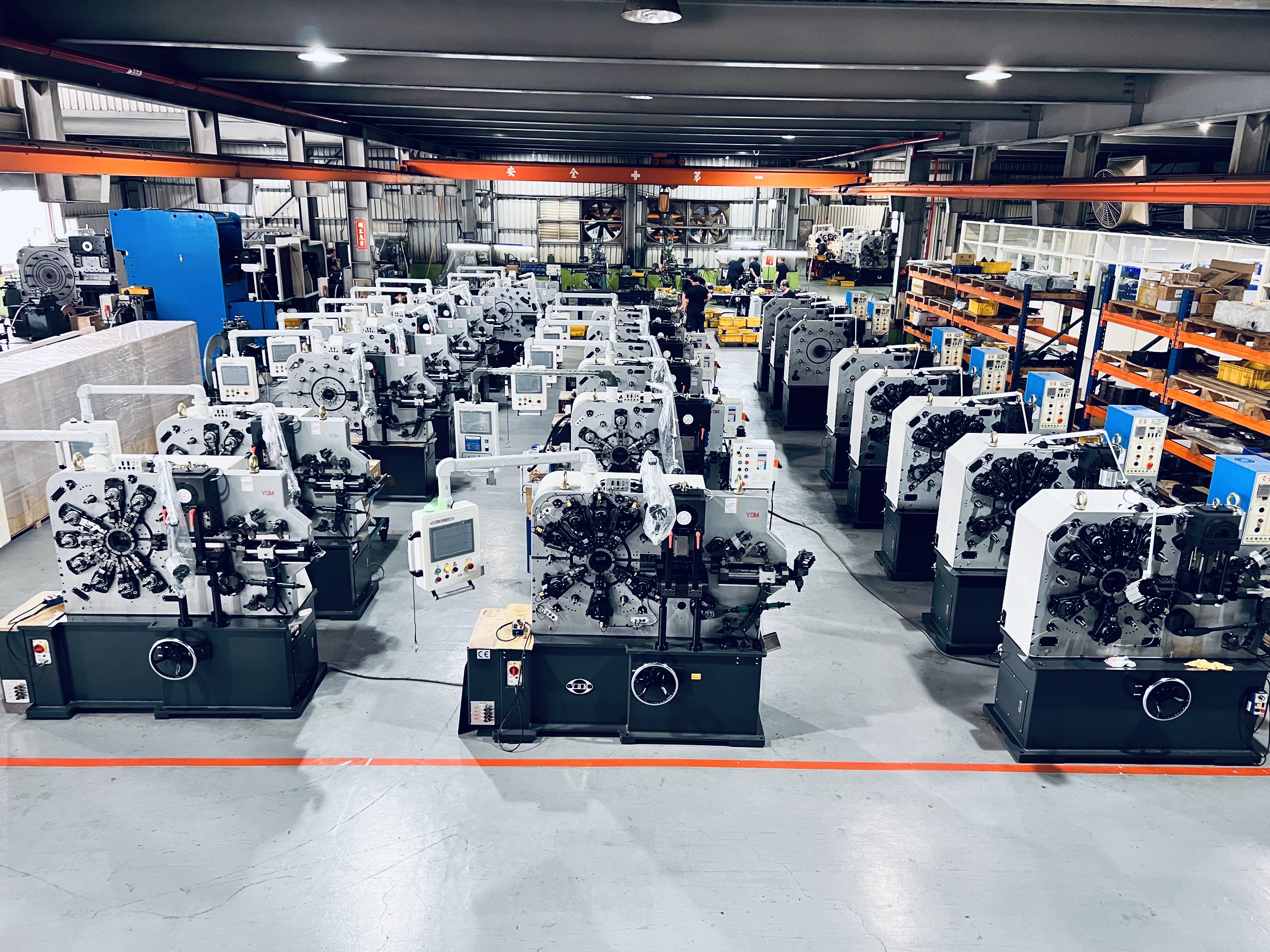
Established in 1979, YSM (Yih Shen Machinery) has grown into a globally recognized Taiwanese specialist in stamping, strip-and-wire forming, and bending manufacturing solutions. Headquartered in Taichung, the company employs more than 100 people worldwide and manufactures over 200 machines annually for customers across Asia, Europe, the Americas and other international markets. It has various support facilities around the world, including a Technology Centre in India.
YSM has placed a strong focus on tool design, continuous innovation and customer service in its global operations. YSM’s slide-forming systems can integrate secondary operations such as tapping, welding, thread forming, riveting and inspection into a single production line. This enables the company to serve as a one-stop solutions provider covering process automation, welding and thread-forming systems, inspection technology and customised tool design.
YSM has delivered various projects in Asia and Europe, designed to remove its customers’ dependence on manual processes and operations by automating equipment. We asked Gregory Wilfred, CEO of YSM International, to highlights trends, drivers and challenges in global sheet metal markets and explains how they have influenced YSM’s culture of continuous innovation.
ISMR: Please highlight any notable successes and achievements over the past two-three years for YSM?
GW: Over the past two to three years, YSM has continued to strengthen its position through product innovation, international expansion and smart-manufacturing development. The company has upgraded its CAMLESS servo-driven machinery with higher processing speeds, simplified user interfaces, enhanced safety features and Industry 4.0-compatible, IoT-enabled monitoring.
It has also successfully delivered customised systems that combine stamping, bending, welding and tapping—operations that would traditionally require three or four separate machines—into one integrated production line. YSM’s India Technology Centre has further expanded its ability to provide localised technical support to customers across Asia, the Middle East and Europe.
At TIMTOS 2025 in Taiwan, we introduced upgraded models including the CNC-39T, featuring a more powerful 45-ton double-crank press for improved stability and precision, and the dual-servo YSM-36TC2, designed to provide greater feeding flexibility while maintaining high accuracy. These developments demonstrate our continued commitment to modular equipment, production-line integration, process simplification, sustainability and cost-effective automation.
ISMR: What are your views on the current global business climate for sheet metal professionals?
GW: The current global business climate for sheet metal professionals is challenging but also presents significant opportunities for companies prepared to invest in automation and flexible manufacturing. Manufacturers are under increasing pressure to reduce production costs, improve productivity, shorten delivery times, decrease their dependence on manual labour and achieve a faster return on capital investment.
At the same time, customers require greater production flexibility, particularly as product lifecycles shorten and demand becomes more varied. As a result, automation, robotics and integrated production systems are becoming increasingly important as the sheet metal industry moves away from traditional labour-intensive manufacturing.
However, economic uncertainty, fluctuating demand, rising operating costs and the impact of U.S. tariffs continue to influence customers’ investment decisions. These conditions are encouraging manufacturers to evaluate capital expenditure more carefully and prioritise solutions that offer measurable improvements in efficiency, flexibility and long-term operating costs.
To read the rest of this interview in the October 2026 issue of ISMR, see https://joom.ag/pDfd/p54