
Smart factory solutions
Submitted by:
Sara Waddington
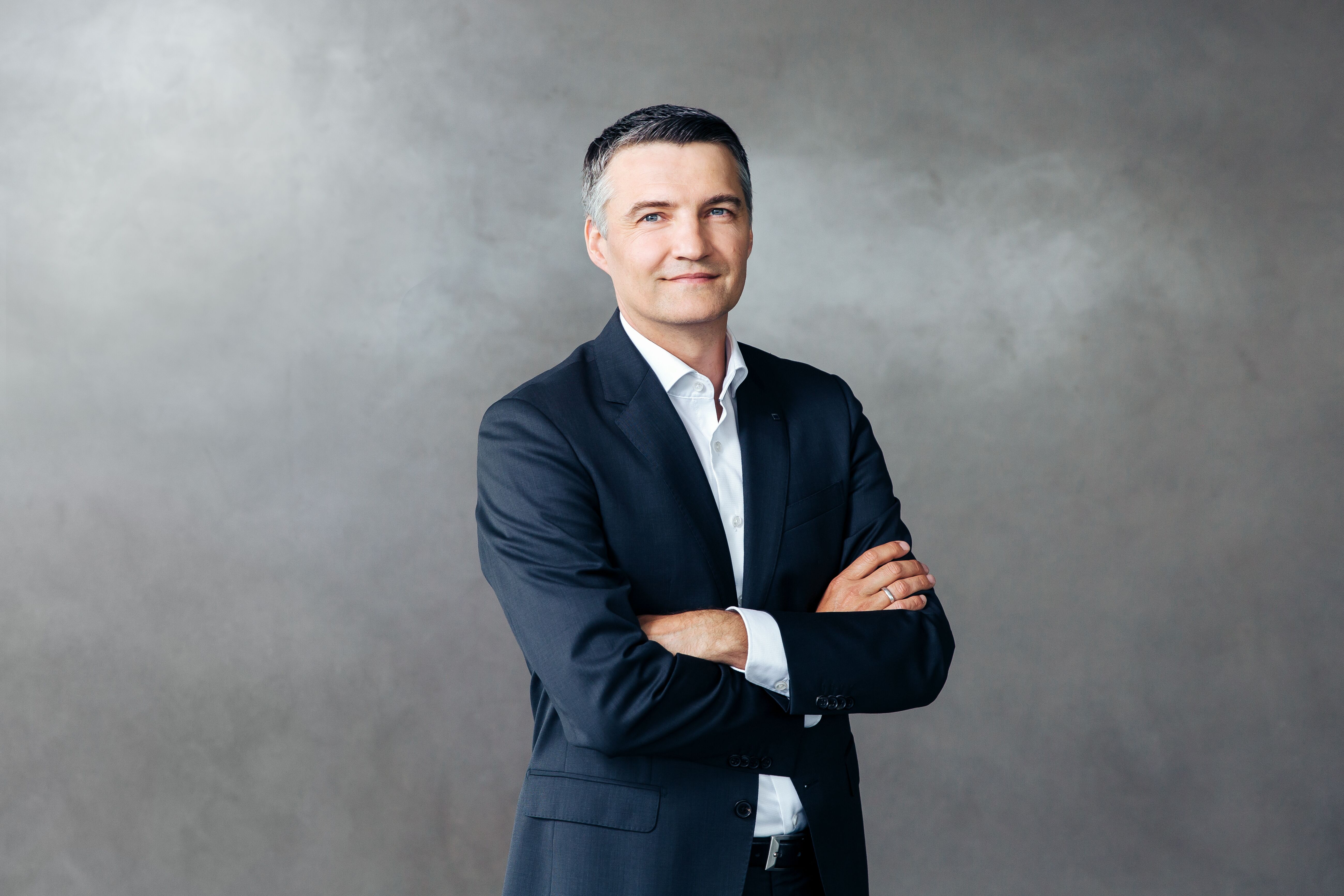
Dr.-Ing. Stephan Mayer, CEO at TRUMPF Machine Tools, shares his view of the global business climate for sheet metal manufacturers as well as industry trends and challenges. TRUMPF’s latest technology launches for EuroBLECH 2026 in Hanover also come under the spotlight.
===
TRUMPF was founded in 1923 as a series of mechanical workshops and has since developed into one of the world’s leading companies for machine tools, laser technology and electronics for industrial applications. In the 2024/25 fiscal year, the company (with its 18,303 employees) generated sales revenues of 4.329 billion euros.
The high-tech sheet metal specialist also drives digital connectivity in manufacturing through consultancy, platform products and software. Its software solutions pave the way to the Smart Factory, allowing TRUMPF to implement high-tech processes in industrial manufacturing.
The TRUMPF Group is represented in nearly every European country as well as in North America, South America and Asia. The company has production facilities in Germany; France; the United Kingdom; Italy; Austria; Switzerland; Poland; the Czech Republic; the United States; Mexico and China.
In the run-up to FABTECH and EuroBLECH, Dr-Ing. Stephan Mayer, Chief Executive Officer for Machine Tools at TRUMPF, shared his view of the global business climate for sheet metal manufacturers as well as industry trends, challenges and TRUMPF’s latest technology launches for EuroBLECH 2026 (20-23 October 2026 in Hanover, Germany).
ISMR: Please highlight any notable successes and achievements for TRUMPF machine tools over the past two years.
SM: For the machine tools’ industry generally, there has been a decline in order intake and a global economic downturn for two to three years in a row. However, in the last year we have seen a recovery in the economic situation for machine tools (especially in sheet metal) so we are happy to acknowledge that the crisis seems to be over, or is at least stalling, mainly due to strong demand for sheet metal components around data centres and defence applications.
In terms of successes, I would like to mention our progress in technology. Over the last two years, we have been able to apply artificial intelligence (AI) throughout our company as well as in our products and services. Our aim is to become the leading provider of AI-based solutions for the manufacturing sector.
As you will see at EuroBLECH in Hanover this October, our products that apply AI are now easier to use, more robust and more autonomous (e.g. less programming effort is needed to run automation/robotics). At EuroBLECH, you will see robots on our stand that are completely programmed and run by AI. Finally, we are seeing the real impact of AI on our customers. We are also starting to see more and more use cases for our internal processes based on AI.
Another success is a continuous increase in our Smart Factory market share. We regularly receive very positive feedback from our customers about the level of automation and lights-out production in our Smart Factory solutions.
We also see substantial growth in customer satisfaction on our service performance. Post-COVID, we suffered from a lack of spare parts and slower service response times. Over the last two years, however, we have substantially improved our service performance in two areas: “reactive” service and “proactive” service based on connectivity. These two areas alone have enabled unprecedented levels of service and machine uptime for our customers.
“Reactive” service concerns the rapid provision of spare parts or the booking of a field service engineer to fix an issue. We have improved this by investing in more spare parts, better processes and more highly trained service technicians. The result can be measured from our customer satisfaction surveys and process KPIs. Success in this area contributes to the competitiveness of our machine tools.
“Proactive” service based on connectivity relates to around 10,000 online/connected TRUMPF machines which continuously send us data. We use AI to analyse this data so that we can proactively contact our customers (if we see bottlenecks or any operational issues) and suggest potential solutions to rectify the situation proactively.
ISMR: What are your views on the current global business climate for sheet metal professionals? What are your predictions for the business climate in 2027?
SM: After a three-year decline, our last fiscal year (which ended in June) showed a recovery in order intake and sales. This year, we predict further growth. The last three months (the first quarter of our fiscal year) showed additional growth so we are seeing a real recovery now.
This growth is mainly driven by…. (to read the rest of this interview in the October 2026 issue of ISMR, see https://joom.ag/pDfd/p36