
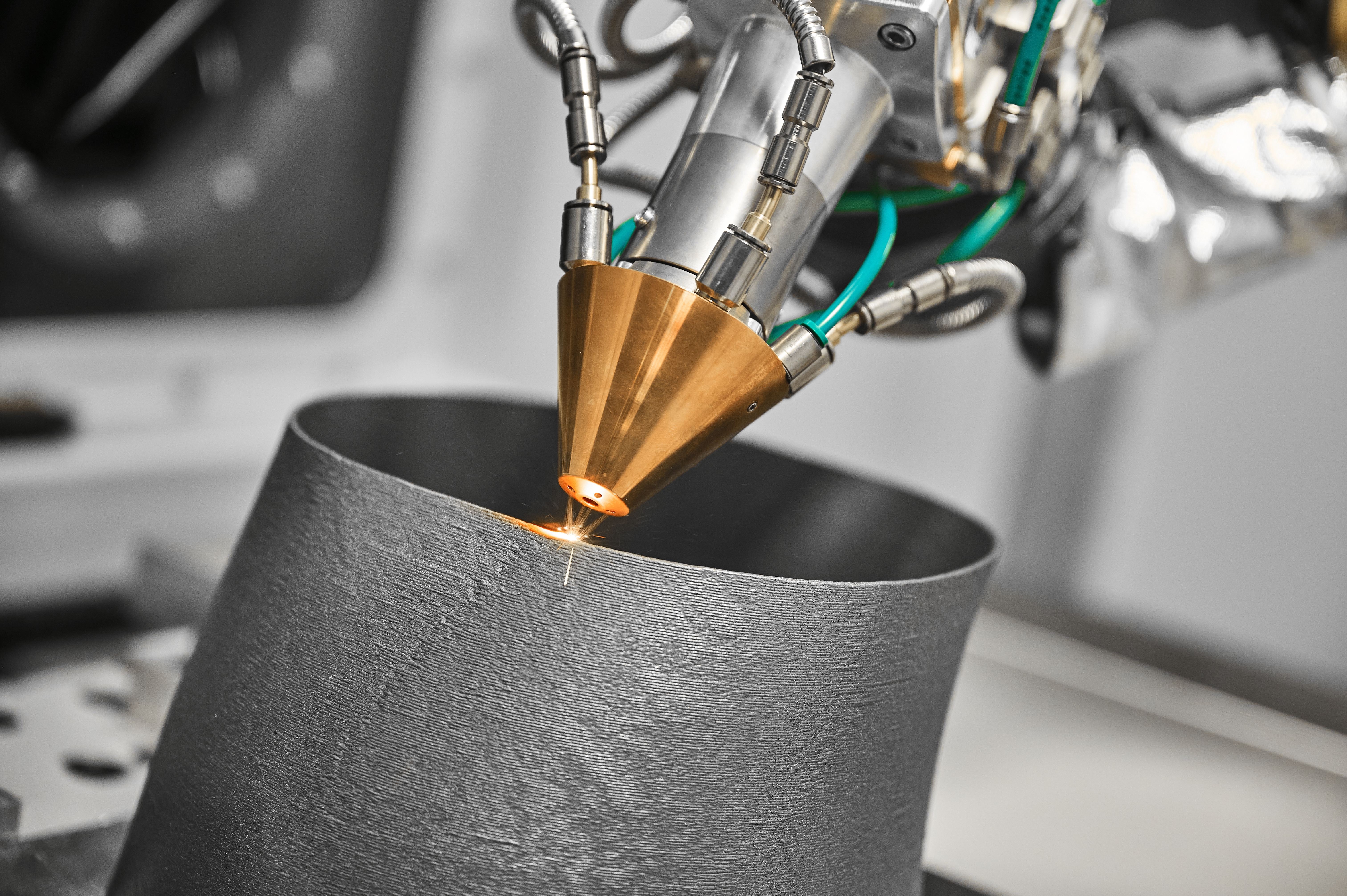
The evolution of additive manufacturing
Submitted by:
Sara Waddington
We present the evolution and benefits of additive manufacturing (AM), as well as its impact on modern and future production, in the February 2026 issue of ISMR.
====
Additive manufacturing (AM) is a resilient manufacturing technology, which involves creating a physical model of a digital CAD 3D model by building up layers of material using a 3D printer. This layer-based process allows the production of geometrically intricate parts with reduced waste, optimised weight and faster design-to-production cycles.
Compared to 3D printing, AM is typically associated with industrial and manufacturing applications. Once considered a niche technology, additive processes are now integral to modern production workflows: from prototyping to cost-effective, small-batch production across diverse application areas. One of the main advantages of additive manufacturing over subtractive methods is its lower material consumption and greater flexibility in metal processing.
Rather than removing material, as in milling, components are built layer by layer with raw material selectively melted using a high-energy source such as a laser or an electron beam. AM is a rapidly evolving field; parts can be designed faster with increased flexibility, better materials and optimised efficiency. It can also provide reduced product lifetime ownership costs and reduced through-life maintenance. Sustainability benefits come through the efficient use of materials and new efficient supply chains.
Common metals employed include steel; titanium; aluminium and cobalt chrome alloy. Additive manufacturing metals typically come in powder form, either as loose powders or bound together with a binder material.
There are various individual AM processes which vary in their method of layer manufacturing. Individual processes will differ depending upon the material and machine technology used. Examples of AM processes include stereolithography; fuse deposition modelling (FDM); direct metal laser sintering (DMLS); selective laser sintering (SLS); inkjet printing; polyjet printing; laser metal deposition and electron beam melting (EBM); digital light processing (DLP); laminated object manufacturing and others.
New design philosophy
However, additive manufacturing (AM) is not a stand-in for traditional manufacturing methods, but a new way of looking at product design. It enables manufacturers to create designs that could not be produced using traditional manufacturing processes. Prototyping applications are prevalent, as additive manufacturing allows for quick iterations and design improvements. Industries such as aerospace, automotive, healthcare, energy and consumer goods are embracing additive manufacturing to streamline production processes, reduce waste and enable complex designs that were previously unattainable.
To read the rest of this article in the February 2026 issue of ISMR, see https://joom.ag/yFEd/p34