
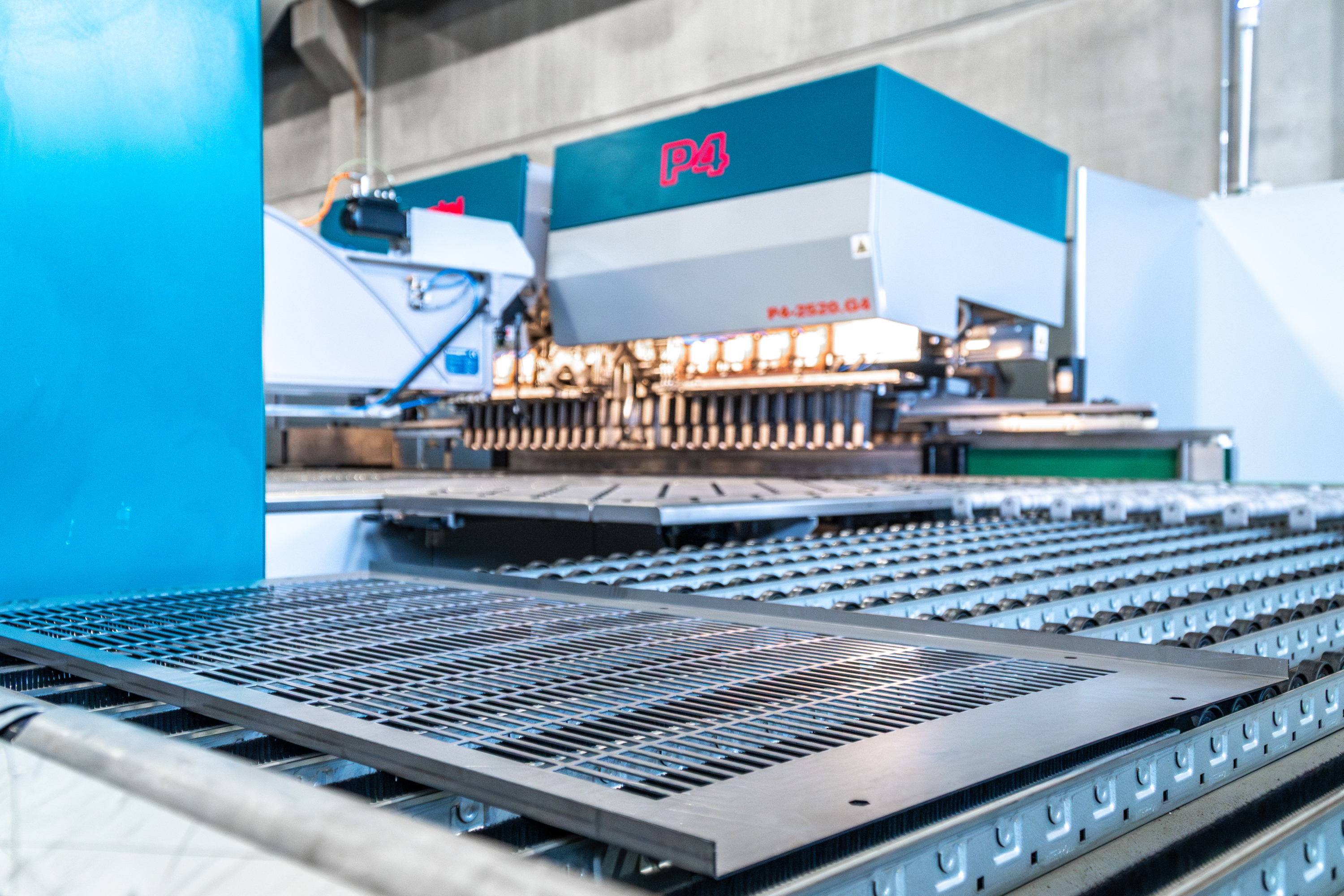
Panel bending in focus
Submitted by:
Sara Waddington
ISMR was invited to Salvagnini’s bending plant in Ennsdorf, Austria, to see its latest sheet metal panel bending technologies and mixed technology cells.
===
For more than sixty years, Salvagnini has been designing, manufacturing and selling flexible systems for sheet metal processing. Its panel benders; punching machines; press brakes; fibre laser cutting systems; FMS lines; automatic store-towers and software support manufacturers across a wide range of industries. Founded in 1963, its headquarters are at Sarego, Italy.
Salvagnini held its Xperience event from 4-8 May 2026 at Salvagnini Maschinenbau, Europe’s largest manufacturing facility entirely dedicated to panel benders and the Salvagnini Group’s key plant for high-end panel bending technology. Based in Ennsdorf, Austria, the plant brings together approximately 500 dedicated technicians and decades of specialist expertise in panel bending.
The Xperience event demonstrated to hundreds of international sheet metal manufacturers and visitors, over the course of the week, how they can respond to a more demanding industrial environment with technologies designed to combine flexibility, control and continuity. ISMR was invited to attend the event.
“Across all the solutions on display, the common thread is the same: applying technology where it creates real value in the production process. Xperience 2026 offered a concrete view of how sheet metal manufacturers can respond to variability, complexity and labour pressure with smarter, more stable and more efficient production models,” Alberto Colpo, Digital Communication Manager, Salvagnini, told ISMR.
Trends shaping production
“Manufacturing is becoming harder to manage. Demand is less predictable, global supply chains remain exposed to external pressures and regulation continues to add complexity. At the same time, sheet metal manufacturers are being asked to deliver lighter, precise and better-finished parts, often in smaller batches and with shorter lead times. Customisation, high production and labour scarcity are pushing companies to adopt production models that are easier to manage, less dependent on operator skill and more stable over time,” continued Alberto Colpo.
To read the rest of this article in the June 2026 issue of ISMR, see https://joom.ag/mVKd/p20